Graduation treatment timing: what can be planned in time?

Short answer: Graduation treatment timing is best considered in relation to your concern, timing and individual assessment. The right approach depends on what you hope to address.
Key Takeaways
- Graduation treatment timing is not a one-size-fits-all answer; an assessment helps match the concern to an option.
- this overview distinguishes possible goals from not assured outcomes.
- Timing, recovery and individual response should shape decisions.
- Ask a qualified clinician about alternatives, limits and follow-up.
Read This Section
- Why plan graduation treatment timing early?
- How early should you plan filler?
- When should you schedule botulinum toxin?
- What may fit a shorter window?
- Can you rush jawline or fat-focused changes?
- How can you organize the timeline?
- How can Obliv Young help?
- Frequently asked questions
Why plan graduation treatment timing early?
Graduation season can include rehearsal, the ceremony and separate photo sessions, not just one day. the guidance describes ceremonies from November through February and recommends starting skin and facial planning at least 1–2 months ahead. Those are the guidance’s general planning windows, not a promise that a particular treatment will be ready by a set date.
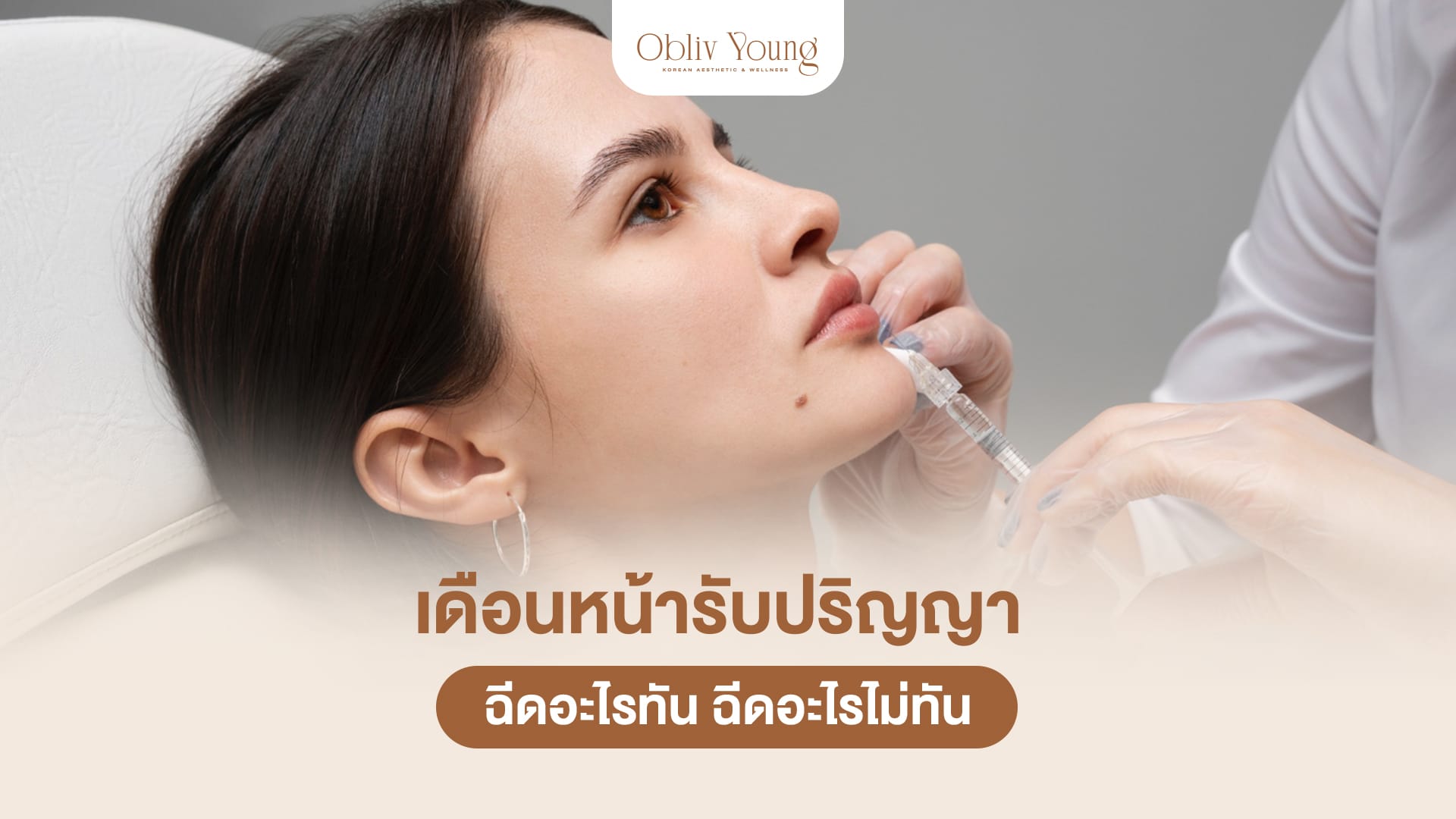
Treatments do not all settle or become noticeable at once. Filler may need time for swelling to ease; botulinum toxin takes time to begin working; and skin-focused treatments may need recovery time. Begin with the date and concern, then ask a qualified clinician what is realistic for you.
How early should you plan filler?
Filler may create an immediate visible change, but this overview distinguishes that from a settled, natural-looking result. Mild swelling or bruising may occur. the guidance gives swelling as more noticeable during days 1–3, easing over days 3–7 and becoming more settled over days 7–14. It says to allow at least 2 weeks; its FAQ gives a broader 2–4 week window before the event.
For lips, the guidance notes swelling can be especially visible during days 1–3, easing over days 7–14. It places a more settled lip shape at 2–3 weeks. Under-eye swelling may take slightly longer than other areas; the guidance says 7–14 days for settling and 2–3 weeks for a natural appearance. Discuss the specific area and your history rather than treating any window as not assured.
Graduation treatment timing: When should you schedule botulinum toxin?
the guidance describes an initial change in muscle movement around days 3–4, clearer early effects at about 1 week. and the clearest result at 2–4 weeks. For jawline goals, it recommends planning at least 1 month ahead because muscle change takes time. Its FAQ separately advises doing it 2–3 weeks before the event. It notes 3–7 days to begin working and another 1–2 weeks for a fuller effect. Keep these timing windows intact and confirm an individual plan with a clinician.
Botulinum toxin is not presented as a next-day option. If the event is close, the guidance advises against relying on a last-minute treatment for a change that takes time. A clinician should assess whether the proposed timing and goal fit your circumstances.
What may fit a shorter window?
the guidance places mesotherapy or skin boosters among options for skin appearance closer to an event. It describes hydration as noticeable immediately, with visible brightness in 1–3 days and a best-looking period around days 3–7. It suggests a 1–3 day pre-event window for this short-term boost. These are the guidance’s stated timings, not a prediction for every person or product.
For inflamed spots, the guidance says extraction or injection may reduce a spot within 1–3 days. It describes short-term skin changes over 3–7 days. It cautions that deeper texture concerns—such as acne scars or enlarged pores—take months and are not suited to rushing before an event.
Can you rush jawline or fat-focused changes?
this overview says jawline and cheek-volume changes need more time than a quick skin boost. It gives botulinum toxin for the jaw a first change around 1–2 weeks and a clearest period at 3–4 weeks or more. The guidance recommends at least 1 month of planning. For mesofat, it describes a slight change around 1 week and clearer changes around 2–3 weeks; some cases may need more than one session.
When there is not enough time, the guidance suggests focusing on skin appearance rather than expecting a structural change. Avoid trying a new procedure close to the event: swelling, irritation or an unsettled result may leave little time to respond.
How can you organize the timeline?
With at least 1 month, the guidance prioritizes planning for changes that need more time, such as jawline botulinum toxin or mesofat. It places filler around 2–3 weeks ahead for settling, while its specific FAQ suggests 2–4 weeks. The guidance presents skin boosters as a closer-to-event option. These overlapping windows come from the guidance; a clinician should help resolve which applies to your area and treatment.
If only 2 weeks remain, the guidance suggests faster-recovery skin options such as a skin booster or a treatment with no downtime. and advises avoiding filler or botulinum toxin because they need time to settle. It also stresses sleep, hydration and basic skin care. A consultation can help decide whether to proceed, adjust expectations or wait.
For general context, see NHS overview of cosmetic procedures. This external information does not replace an individual assessment. For a relevant clinic page, see filler treatment options.
Graduation treatment timing: How can Obliv Young help?
It can be difficult to know which option fits your main concern or timing. At Obliv Young, an assessment can help clarify the goal, discuss what may be appropriate and set realistic expectations. A clinician can assess your individual circumstances before you decide; a procedure is not required simply because you ask about it.
Discuss graduation treatment timing with a clinician in the context of your goals and individual assessment.
Frequently asked questions
How early should I start planning for graduation?
the guidance recommends starting 1–2 months before graduation because treatments may need time to settle and skin may need recovery. A clinician can help tailor the plan.
What may fit if only 2 weeks remain?
the guidance suggests faster-recovery skin options, such as a skin booster or a treatment with no downtime. It advises avoiding filler or botulinum toxin when there is not enough time for settling.
How far ahead should you plan filler?
the guidance gives 2–4 weeks before the event in its FAQ. Swelling often eases over 3–7 days, and results settle over 7–14 days. Area and individual recovery vary.
When should you schedule botulinum toxin?
the guidance FAQ says 2–3 weeks ahead, with effects beginning in 3–7 days and another 1–2 weeks for fuller effects. For jawline treatment, it also advises planning at least a month ahead.
If you would like to understand your main concern, you can contact Obliv Young to ask questions and arrange an assessment.
This article was medically reviewed by
Mr. Park Young Jin
Education
Graduated with a Doctor of Medicine degree from Inha University College of Medicine, and completed an executive program at Seoul National University. Gained experience as a Public Doctor within the government sector before advancing into Aesthetic Medicine with leading Korean clinic groups, including Forever Plastic Surgery, Ppeum Clinic, and Y&I Clinic, serving as a physician and Senior Doctor
Specializes in
Specializes in Aesthetic Medicine, Facial Contouring, and Facelifting Techniques, serving as President of the Obliv Clinic Network (Incheon, Bangkok, Dubai). Also active in the academic community as Academy Director of the Korean Aesthetic Surgery & Laser Society and Senior Director of the Korean Academy of Facelifting and Contouring , as well as a Global KOL and Key Doctor for leading brands including Wontech, MERZ, Jetema, Amalian, and Gouri, covering Filler, Energy-Based Devices, and Skin Rejuvenation technologies internationally. Source: Aestheticsa