What matters in an rf microneedling devices comparison?

Short answer: An rf microneedling devices comparison should look at the concern, device design, and clinician assessment rather than popularity alone. A doctor should assess the concern and your individual circumstances.
Key Takeaways
- RF microneedling devices differ in wave modes, needle count, depth, and tip design.
- The devices compared here are Sylfirm X, Morpheus8, Potenza, Secret RF, and Genius RF.
- Skin tone and pigment concerns should be part of a doctor’s assessment.
- A general session range is 3–4 sessions spaced 4–6 weeks apart; suitability varies.
Read This Section
- What is RF microneedling? See an rf microneedling devices comparison.
- How do continuous and pulsed waves differ?
- RF microneedling devices comparison: how do devices differ?
- Why consider skin tone and pigment concerns?
- What should you know about needle tips?
- RF microneedling devices comparison: how do you choose?
- How can a doctor assess suitability?
- Frequently asked questions
What is RF microneedling?
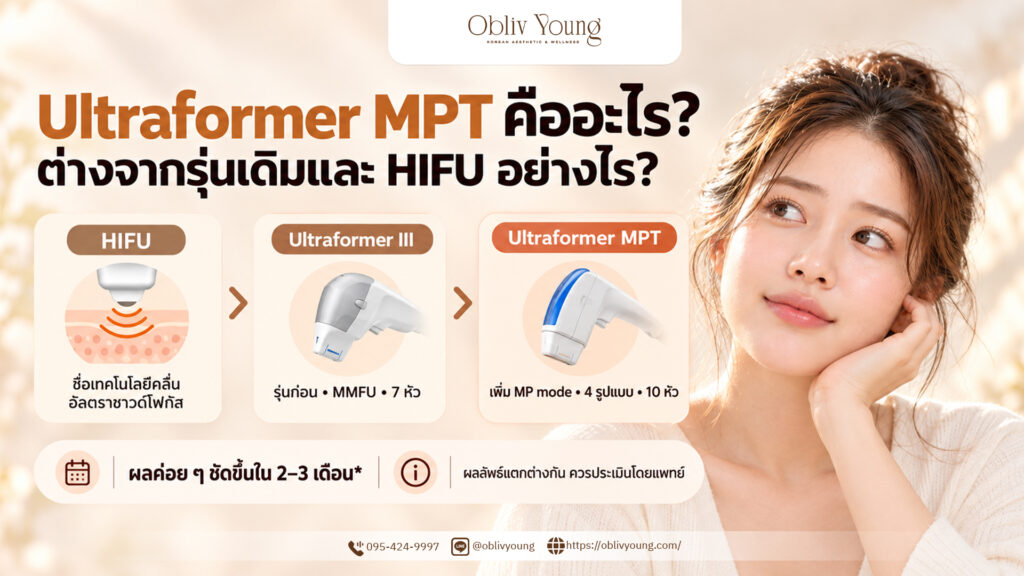
RF microneedling combines small needles with radiofrequency energy. RF microneedling delivers heat into the dermis to stimulate new collagen, and may be considered for large pores, acne scars, uneven texture, and mild laxity.
Devices can differ in wave pattern, needle count, depth, and tip design. Therefore, the name of the treatment alone does not tell you which device or settings fit a concern. Read our Sylfirm X guide to uneven texture and acne scars.
How do continuous and pulsed waves differ?
Continuous wave (CW) delivers radiofrequency energy steadily, while pulsed wave (PW) delivers energy in short repeated pulses. It associates CW with collagen stimulation and PW with concerns involving pigment, redness, or small vessels. Sylfirm X combines both modes, while the other devices in this comparison use CW.
Device features and comparisons may change as devices develop. They are not a universal safety ranking. A clinician must assess the concern and device settings for an individual.
What does an rf microneedling devices comparison cover?
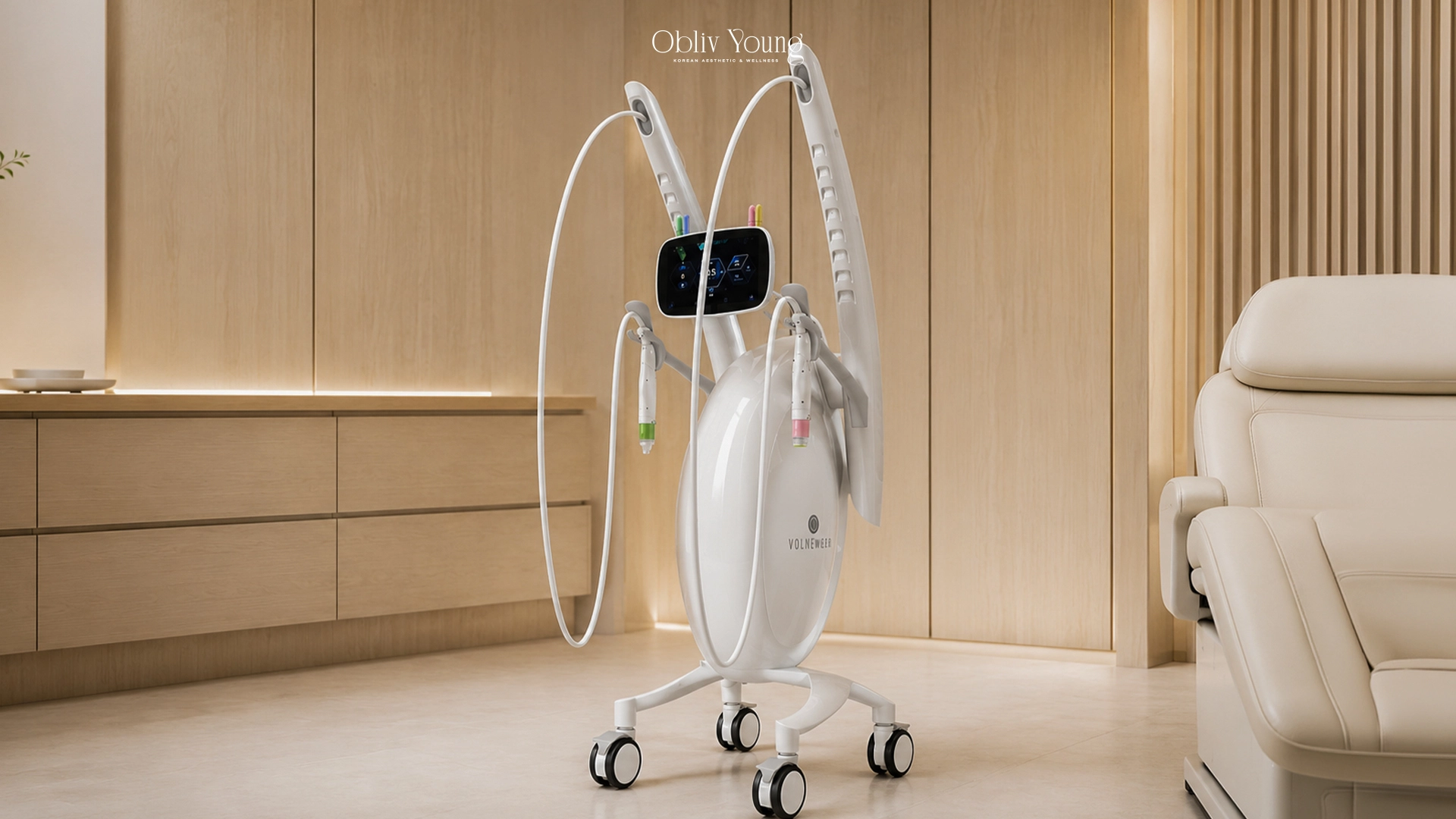
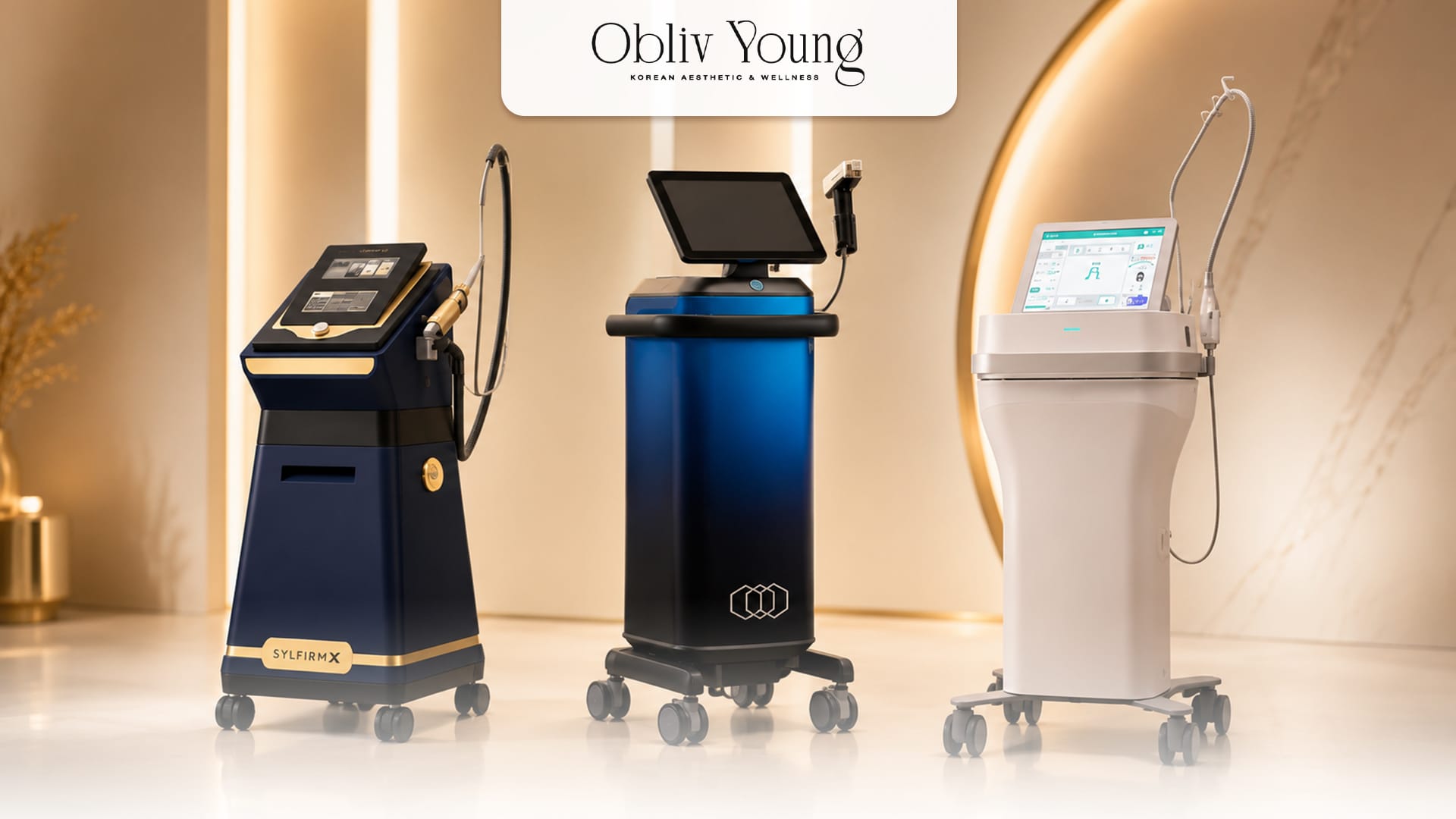
rf microneedling devices comparison: device examples
Sylfirm X: Sylfirm X offers both CW and PW modes, gold non-insulated needles, and an adjustable depth range of 0.3–4.0 mm, selected according to skin thickness and concern.
Morpheus8: Morpheus8 reaches a stated depth of up to 4 mm and focuses on deeper lines and more visible laxity. It also says this device uses CW.
Potenza: Potenza features interchangeable Fusion Tips and flexibility across concerns; it uses CW.
Secret RF: Secret RF uses non-insulated needles and fine energy adjustment for general lines and uneven texture.
Genius RF: It highlights real-time impedance feedback and compares a 49-needle tip with a 24-needle Morpheus8 tip. These are device descriptions, not a promise that one will suit every person.
Why consider skin tone and pigment concerns?
Skin with more pigment may be more prone to post-inflammatory hyperpigmentation (PIH) when treated with continuous heat. It discusses this concern particularly for people with pigment, melasma, or redness alongside texture issues.
It presents pulsed wave as a mode designed for pigment or vascular concerns, but does not make an individual safety promise. Ask a doctor to assess your skin, treatment history, active concerns, and the proposed settings. The American Academy of Dermatology explains what patients should know about microneedling, including radiofrequency microneedling.
What should you know about needle tips?
A 49-needle bipolar Sylfirm X tip is one option among several; tip choice depends on the treatment area and purpose. It states that the needle depth can range from 0.3–4.0 mm. A doctor selects depth and tip for the individual rather than using one setting for every case.
The comparison also notes 49 needles for Genius RF and 24 for Morpheus8. This rf microneedling devices comparison summarizes device features, not individual results. Needle count alone does not establish which device is better. Design, target concern, skin, and clinician assessment all matter.
How do you choose a device?
Start with the concern you want assessed. An rf microneedling devices comparison can help frame questions, but it cannot select a treatment for you. Start by considering: enlarged pores, acne scars, uneven texture, laxity, pigment, redness, or a combination. Then ask which device mode and tip address that concern, and why that choice fits your skin.
- Ask what feature is relevant to your concern.
- Discuss skin tone and any pigment or redness concerns.
- Ask what the proposed needle depth means for your treatment plan.
- Discuss expected discomfort, recovery, and treatment frequency with the clinician.
The comparison does not give a single number of sessions in the comparison sections; its brief FAQ lists an average course of 3–4 sessions spaced 4–6 weeks apart, with clearer results after 2–3 months. These figures are general guidance, not a personal recommendation. Assessment determines whether they apply.
An rf microneedling devices comparison should consider the concern, design, and doctor assessment rather than popularity.
How can Obliv Young help you consider next steps?
It is easy to focus on a date, age, result, or device name before understanding the concern. An assessment comes first: a doctor can discuss your history, goals, and whether a treatment is appropriate. At Obliv Young, you can ask questions and arrange an assessment without assuming that a particular option is right for you.
Frequently asked questions
Do all RF microneedling devices work the same way?
The basic idea is similar: needles deliver radiofrequency energy to stimulate collagen. Devices differ in wave mode, needle count, depth, and tip design, which can affect their treatment focus.
Why is Sylfirm X different from other devices?
Sylfirm X combines continuous and pulsed wave modes. The other devices in this comparison use continuous wave. Device features and availability can change.
What do device features mean for treatment choice?
What is the difference between Morpheus8 and Sylfirm X?
Morpheus8 uses continuous wave and focuses on deeper lines or visible laxity, with a stated depth up to 4 mm. Sylfirm X offers both continuous and pulsed modes for different concerns. A doctor assesses which fits.
What is the advantage of Sylfirm X’s 49-needle tip?
The 49-needle tip is described as covering a wider area per session, distributing energy more evenly, shortening treatment time, and feeling less painful than the earlier tip. These comparisons are not a promise for every person.
Can people with darker skin have RF microneedling?
RF microneedling may be possible, but the device and mode should suit the individual. It notes that CW-only devices may carry greater PIH risk in skin with more pigment. A doctor should assess the skin and settings.
What should you ask before choosing a device?
What should guide device choice?
Choose based on the skin concern rather than the most popular device. Ask a doctor to assess which device and mode address the concern.
What is RF microneedling?
It uses small needles with radiofrequency energy to stimulate collagen in the dermis. Large pores, acne scars, and laxity are among the concerns it may address.
Which is better: Sylfirm X or Morpheus8?
The better choice depends on the main concern. Sylfirm X may suit pores and shallower acne scars, while Morpheus8 may suit laxity and facial contouring; a clinician should assess the individual.
Does RF microneedling hurt?
Numbing cream is applied first; warmth and small pricking sensations may occur during treatment. It also says mild redness and swelling may occur for 1–3 days, and most people return to work the next day.
How many sessions are needed?
A general course averages 3–4 sessions, spaced 4–6 weeks apart. It says the first session may show slight tightening, while clearer effects may appear after 2–3 months as collagen develops. A clinician assesses an individual plan.
If you would like to understand your main concern, you can contact Obliv Young to ask questions and arrange an assessment.
This article was medically reviewed by
Mr. Park Young Jin
Education
Graduated with a Doctor of Medicine degree from Inha University College of Medicine, and completed an executive program at Seoul National University. Gained experience as a Public Doctor within the government sector before advancing into Aesthetic Medicine with leading Korean clinic groups, including Forever Plastic Surgery, Ppeum Clinic, and Y&I Clinic, serving as a physician and Senior Doctor
Specializes in
Specializes in Aesthetic Medicine, Facial Contouring, and Facelifting Techniques, serving as President of the Obliv Clinic Network (Incheon, Bangkok, Dubai). Also active in the academic community as Academy Director of the Korean Aesthetic Surgery & Laser Society and Senior Director of the Korean Academy of Facelifting and Contouring , as well as a Global KOL and Key Doctor for leading brands including Wontech, MERZ, Jetema, Amalian, and Gouri, covering Filler, Energy-Based Devices, and Skin Rejuvenation technologies internationally. Source: Aestheticsa