HIFU vs Ulthera: How Do the Treatments Differ?





Short answer: HIFU vs Ulthera is a comparison between focused-ultrasound approaches; device features, assessment, and treatment plans differ. Ask a qualified clinician to identify the device and explain whether it fits your concern.
Key Takeaways
- Ulthera as focused ultrasound and discusses the SMAS layer.
- It covers the jawline, under-chin and neck area, brow and eye area, and chest.
- The overview compares real-time imaging, treatment course, reported timing, and sensation; individual results vary.
- Do not assume every HIFU device has the same features or performance.
Read This Section
- What is Ulthera?
- Which areas does the overview discuss?
- How does HIFU vs Ulthera compare?
- What might treatment feel like?
- How should you decide between the options?
- When should you seek an assessment?
- Frequently asked questions
HIFU vs Ulthera: What is Ulthera?
Ulthera, also called Ultherapy in the Thai discussion, is described as a focused-ultrasound treatment used for lifting and tightening concerns. The device directs energy to deeper tissue, including the SMAS layer, according to its description. Verify the exact system, indications, and regulatory status with the provider.
The overview emphasizes a real-time imaging feature called See & Treat. It describes imaging as a way for a clinician to view tissue during treatment. This is a device feature, not a promise of safety or a particular result. Ask the provider to identify the machine and explain how imaging informs the plan.
A consultation should distinguish between a concern related to skin laxity and concerns involving fat, facial structure, or other causes. The same visible area can have more than one contributing factor, so a device may not address every concern.
HIFU vs Ulthera: Which areas does the overview discuss?
The overview lists the jawline and jowls, the area under the chin and neck, the brow and eye area, and the chest or décolletage. These are areas discussed in that discussion; they are not an assurance that every area is suitable for every person or device.
During assessment, explain which change you hope to address. Ask what the proposed treatment can and cannot do, whether the target area is within the device’s intended use, and what alternatives might make more sense. A clinician should explain the plan in clear terms before treatment.
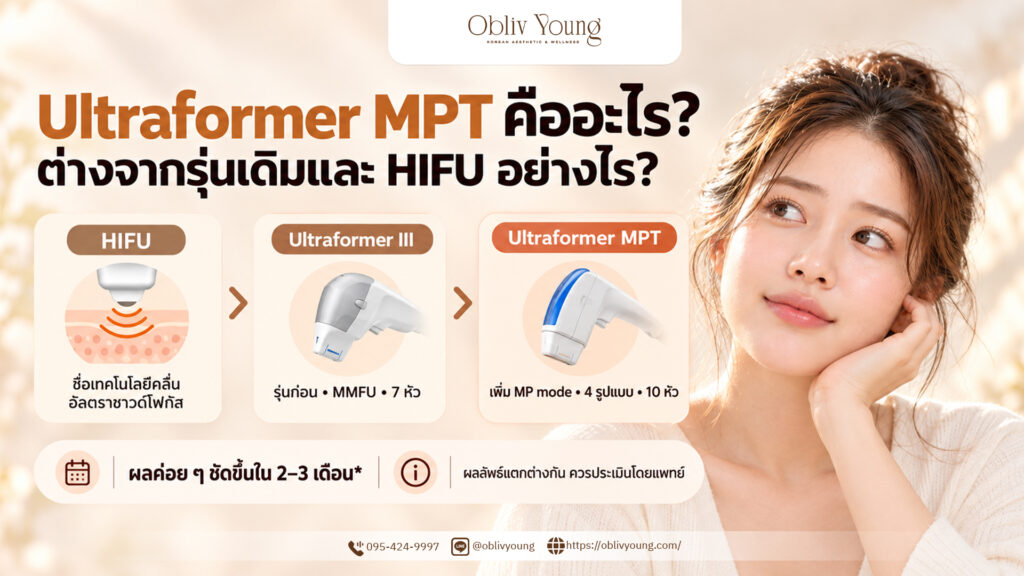
If a provider discusses a different device or handpiece, ask how its features and intended use compare with the named Ulthera system. The term HIFU alone does not identify a specific device or protocol.
How does HIFU vs Ulthera compare?
Both use focused ultrasound, but HIFU is a broad technology category and devices can differ. The Thai overview contrasts Ulthera’s real-time imaging with HIFU devices that it says may not offer the same feature. Do not treat this as a universal statement about every HIFU machine.
Also, compares energy delivery, depth, and precision. Those characteristics depend on the specific device, settings, treatment area, and clinician. Ask for the exact device model and a plain explanation of its role. Avoid choosing on a claim that one option is always stronger or safer.
Reported figures include an immediate visible change of about 20–30% and a fuller change in months 2–3 for Ulthera. It also reports a duration of 1–2 years, compared with 3–6 months for general HIFU. These are overview-reported figures, not a forecast. Individual results and duration can vary, and the comparison may not apply to every device or patient.
What might treatment feel like?
a deep warm or sharp sensation during Ulthera and says some people may find it uncomfortable. Experience can vary by person, area, and plan. Ask what comfort measures are available and whether they change the treatment approach.
Do not interpret pain as proof that energy has reached a specific layer or that the treatment is working. Tell the clinician if the sensation feels unexpected or difficult to tolerate. Ask what symptoms afterward are expected and how to reach the clinic if you have concerns.
The overview compares newer HIFU systems as potentially more comfortable, while describing differences in duration. Those are broad comparisons, not a promise. The specific equipment and plan matter more than a category label.
How should you decide between the options?
Start with a medical assessment and a discussion of goals, treatment history, and relevant health factors. Ask whether ultrasound treatment is appropriate, what area will be treated, and what result is realistic. A good plan should include limitations and alternatives, not only expected benefits.
Request the device name, the clinician’s qualifications, the treatment plan, likely temporary effects, possible risks, and follow-up arrangements. Clarify whether the quote covers the stated plan and whether any additional treatment is being proposed. Do not feel pressured to decide during a consultation.
Use evidence and device information rather than broad claims such as gold standard, risk-free, or assured lifting. You can also assess Obliv Young’s overview of aesthetic treatment options as background, then discuss your individual case.
If you are weighing ultrasound treatments, an assessment can clarify whether laxity is the main concern and what each device is intended to address. Discuss benefits, risks, and alternatives before choosing. aesthetic treatment options offers related general context. For an independent overview, see a published overview of focused ultrasound.
For this reason, consider HIFU vs Ulthera in light of your goals and assessment.
Frequently asked questions
Is HIFU the same as Ulthera?
Ulthera is a named focused-ultrasound system, while HIFU can refer to a broader category. Confirm the exact device being offered.
Which areas does the overview mention for Ulthera?
It discusses the jawline, under-chin and neck, brow and eye area, and décolletage. Suitability must be assessed individually.
How long do results last?
Reported figures include timelines, but they are not promises and may not apply to every device or person. Ask the clinician what evidence supports the estimate for your plan.
Does imaging promise a safe treatment?
No. Imaging is a device feature, not a safety promise. Training, assessment, device use, and individual factors also matter.
In summary, your concern and assessment shape HIFU vs Ulthera.
If you would like to understand your main concern, you can contact Obliv Young to ask questions and arrange an assessment.
This article was medically reviewed by
Mr. Park Young Jin
Education
Graduated with a Doctor of Medicine degree from Inha University College of Medicine, and completed an executive program at Seoul National University. Gained experience as a Public Doctor within the government sector before advancing into Aesthetic Medicine with leading Korean clinic groups, including Forever Plastic Surgery, Ppeum Clinic, and Y&I Clinic, serving as a physician and Senior Doctor
Specializes in
Specializes in Aesthetic Medicine, Facial Contouring, and Facelifting Techniques, serving as President of the Obliv Clinic Network (Incheon, Bangkok, Dubai). Also active in the academic community as Academy Director of the Korean Aesthetic Surgery & Laser Society and Senior Director of the Korean Academy of Facelifting and Contouring , as well as a Global KOL and Key Doctor for leading brands including Wontech, MERZ, Jetema, Amalian, and Gouri, covering Filler, Energy-Based Devices, and Skin Rejuvenation technologies internationally. Source: Aestheticsa