Comedonal Acne: Closed vs Open Comedones and What to Do

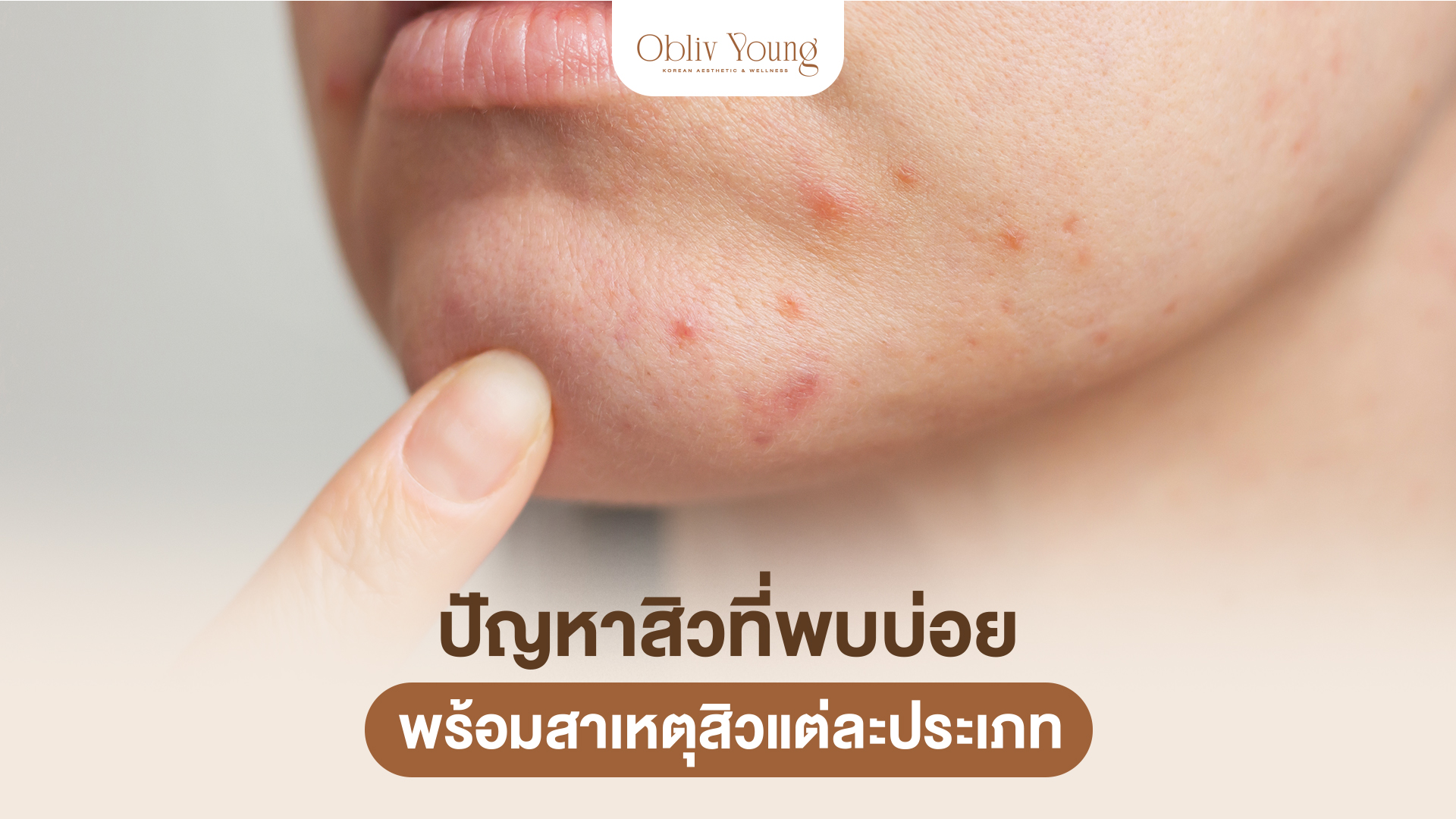
Comedonal acne forms when pores become blocked. It may look like small bumps, uneven texture or visible blackheads before there is clear inflammation. Some people have mainly clogged pores, while others also have red or painful acne. The right starting point depends on what is happening on the skin now.
On this page
What is comedonal acne?
Comedonal acne forms when oil, skin cells and debris collect in pores. Closed comedones may look like small raised bumps, while open comedones can look like dark dots. They are not always painful, but repeated picking or irritation can lead to inflammation and marks.
What can cause comedonal acne?
- Oil and skin-cell build-up inside pores
- Products that your skin does not tolerate well
- Sweat, friction or frequent touching
- Cleansing or exfoliation that leaves skin irritated
- Hormonal and individual skin factors
There is usually more than one factor. Changing an entire routine or adding several active products at once can make it harder to see what is affecting the skin.
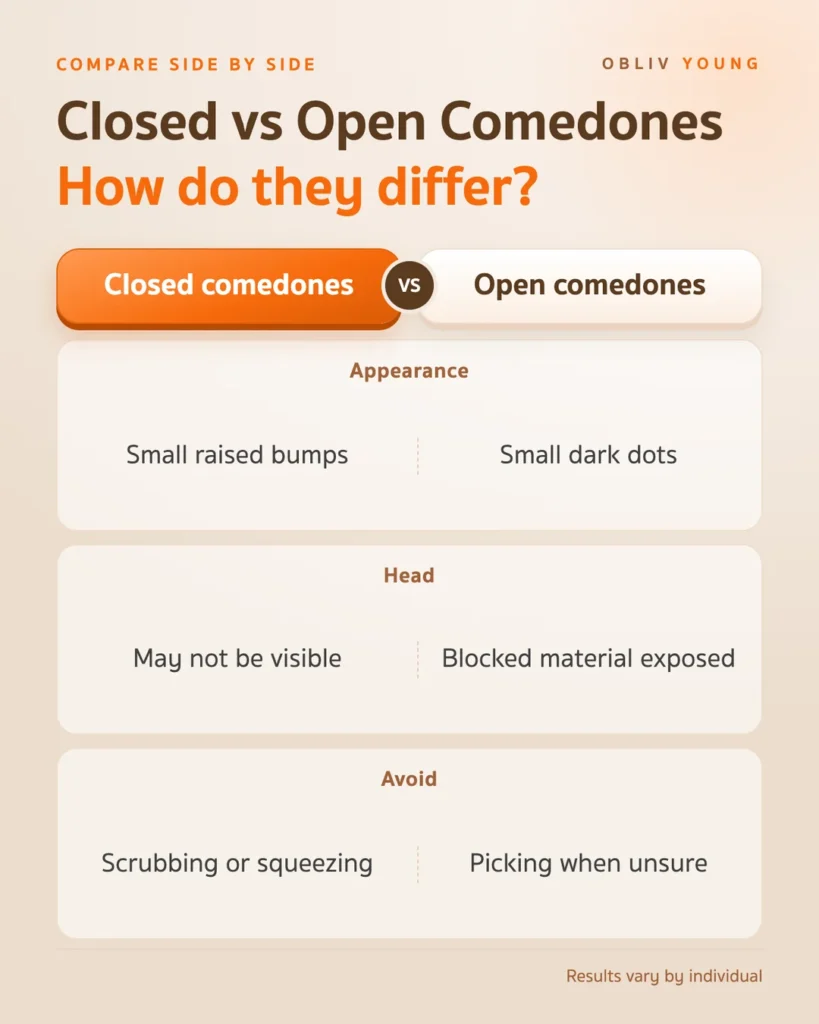
Closed vs open comedones
Closed comedones
Usually look like small raised bumps or rough texture. The head may not be visible.
Scrubbing or squeezing can irritate the area and lead to inflammation.
Open comedones
Often look like small dark dots because the blocked material is exposed to air.
Not every dark dot is a blackhead, so avoid picking when you are unsure.
How should you start caring for comedonal acne?
- Stop scrubbing, picking and changing several products at once.
- Cleanse in a way that does not leave your skin tight or stinging.
- Notice whether the acne is becoming red, painful or itchy.
- Consider friction, makeup and habits if the same area keeps breaking out.
- Ask for advice if bumps continue to increase or become inflamed.
For an overview of acne, marks and uneven skin concerns, see Skin Clarity.
When should you seek a clinic assessment?
Consider an assessment when comedones keep returning, inflammatory acne appears alongside them, texture becomes a concern or marks are starting to form. Assessment helps separate active acne from texture and marks left after acne.
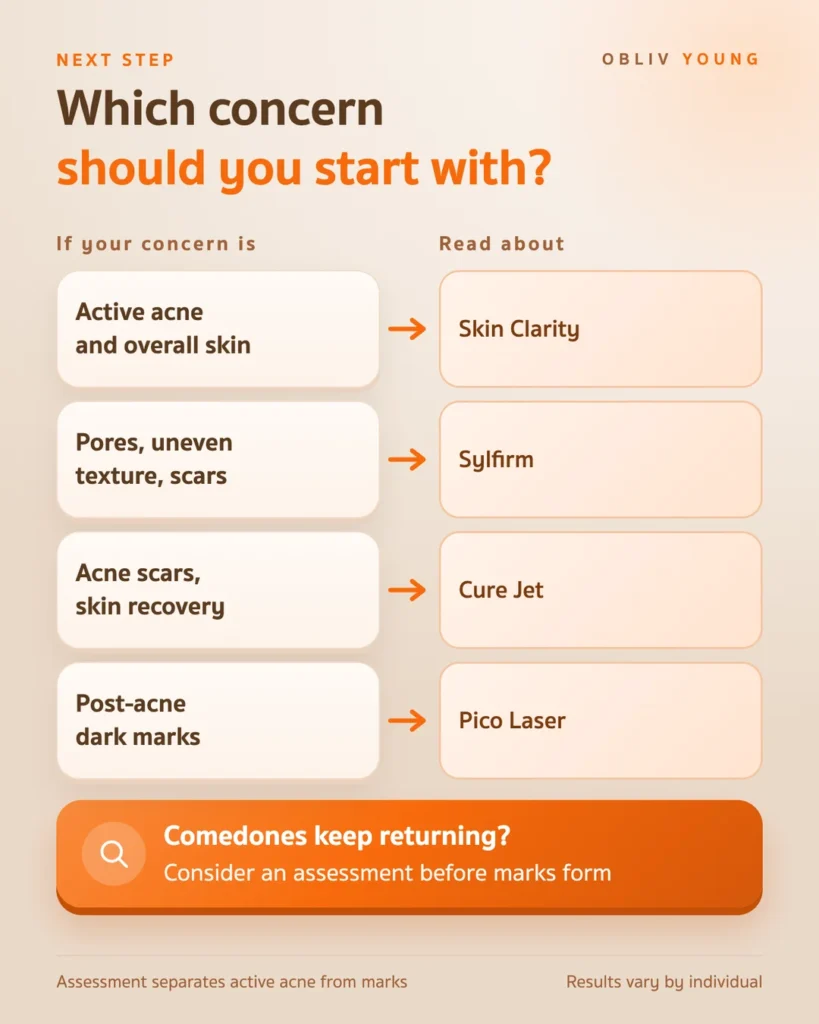
- Active acne and overall skin concerns: start with Skin Clarity
- Pores, uneven texture or acne scars: read about Sylfirm
- Acne scars and selected skin-recovery contexts: read about Cure Jet
- Post-acne dark marks: read about Pico Laser, which addresses a different concern from clogged pores
Frequently asked questions
Can comedonal acne go away on its own?
Some bumps can settle, but ongoing blockage and repeated irritation can make them return. Picking can increase inflammation and marks.
What skincare should I use for clogged pores?
Start with products that do not sting, over-dry or seem to increase blockage. Add active ingredients one at a time so you can see how your skin responds.
What is the difference between comedonal and inflammatory acne?
Comedonal acne usually appears as bumps or blocked pores. Inflammatory acne is more likely to be red, painful, swollen or have pus. Both can appear at the same time.
Should I extract comedonal acne myself?
Avoid extracting when you are unsure what the bump is, especially if it is red, painful or deep. Home extraction can add inflammation and marks.
Can laser treat clogged pores?
First identify whether blockage, inflammation, texture or post-acne marks are the main concern. Devices answer different questions, so not everyone with comedones needs a laser.
If you would like to assess what your main skin concern is, contact Obliv Young to ask questions and arrange an assessment.
In this guide is general information, not a diagnosis. A doctor should assess suitability before a procedure is chosen.
This article was medically reviewed by
Mr. Park Young Jin
Education
Graduated with a Doctor of Medicine degree from Inha University College of Medicine, and completed an executive program at Seoul National University. Gained experience as a Public Doctor within the government sector before advancing into Aesthetic Medicine with leading Korean clinic groups, including Forever Plastic Surgery, Ppeum Clinic, and Y&I Clinic, serving as a physician and Senior Doctor
Specializes in
Specializes in Aesthetic Medicine, Facial Contouring, and Facelifting Techniques, serving as President of the Obliv Clinic Network (Incheon, Bangkok, Dubai). Also active in the academic community as Academy Director of the Korean Aesthetic Surgery & Laser Society and Senior Director of the Korean Academy of Facelifting and Contouring , as well as a Global KOL and Key Doctor for leading brands including Wontech, MERZ, Jetema, Amalian, and Gouri, covering Filler, Energy-Based Devices, and Skin Rejuvenation technologies internationally. Source: Aestheticsa