How to Reduce Acne Marks: Red Marks, Dark Marks and Acne Scars

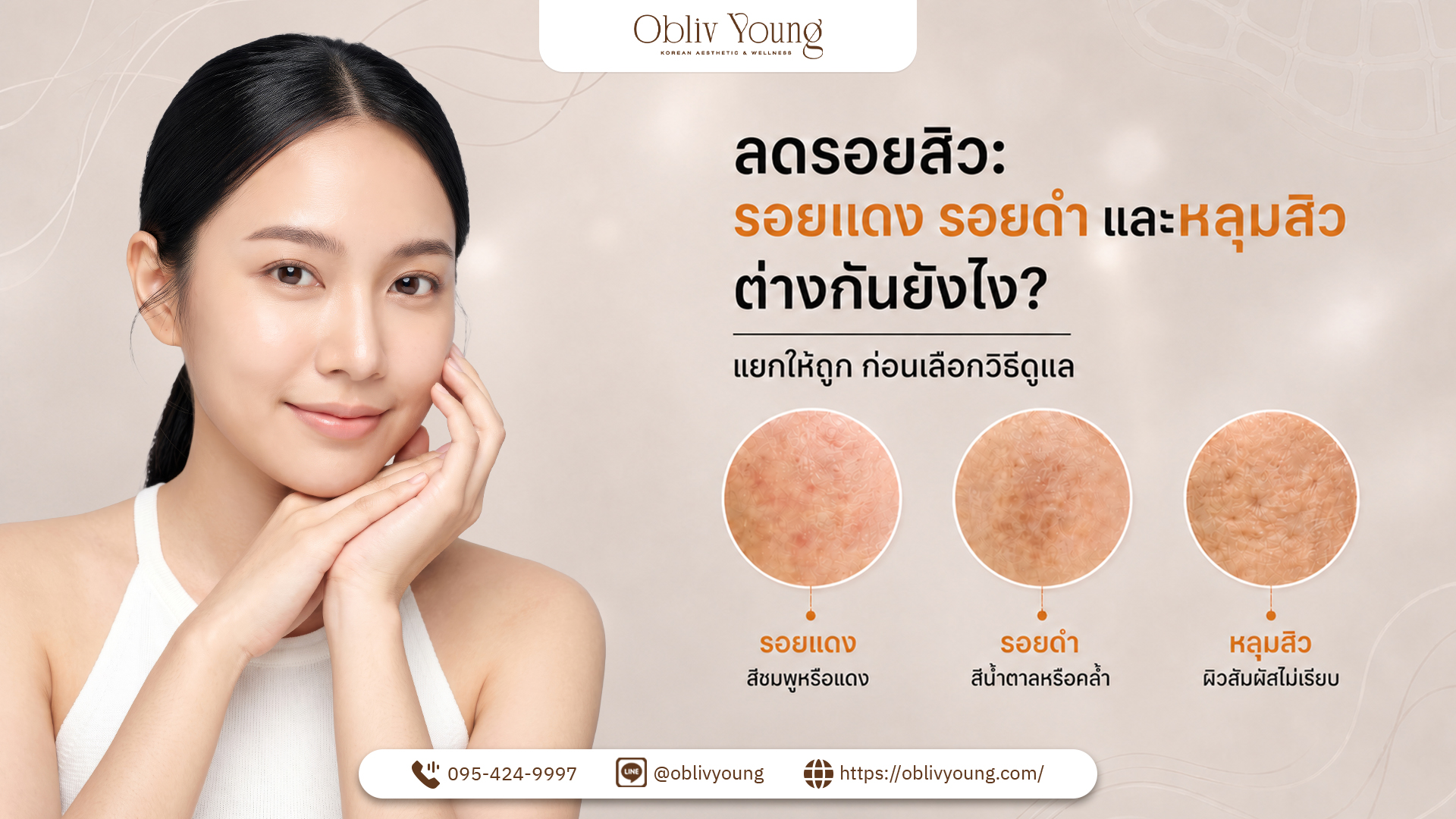
Not every acne mark needs the same approach. Red marks, dark marks and acne scars can all appear after acne, but they affect the skin differently. Identifying the main concern first helps avoid spending time on a treatment that does not match the problem.
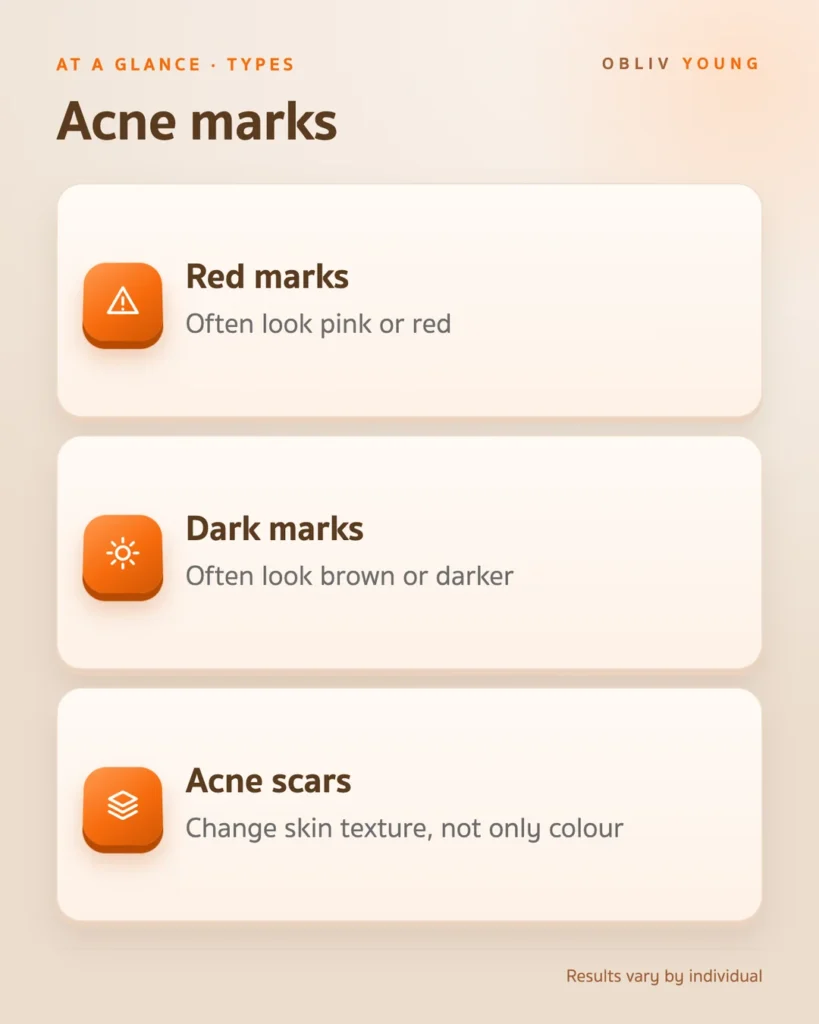
Three common types of acne marks
Red marks
Often look pink or red after inflamed acne settles. Sensitive or easily flushed skin may be part of the picture.
Dark marks
Often look brown or darker after inflammation, especially when skin is exposed to light or repeatedly picked.
Acne scars
These change skin texture, not only colour, so they usually need a different discussion from red or dark marks.
How should you start with red marks?
If active acne is still appearing, deal with that first. New breakouts can create new marks, while picking and harsh products can keep skin red for longer.
Start with a non-irritating routine and light protection. For an overview of acne, marks and uneven skin concerns, see Skin Clarity.
How are dark marks different?
Dark post-acne marks can remain after the acne has settled. Light exposure, picking and repeated irritation can make them look more noticeable.
If uneven tone or dark marks are the main concern, read about Pico Laser to understand one clinic route for pigmentation concerns before deciding.
Acne scars are different from acne marks
Acne scars change the texture of the skin. They do not always fade with red or dark marks, so depth, scar type and texture matter.
If pores, uneven texture or acne scars are the priority, read about Sylfirm and Cure Jet to see how the approaches answer different skin questions.
How should you choose a clinic approach?
Start by deciding whether colour or texture is the main issue. One device is not right for every type of acne mark.
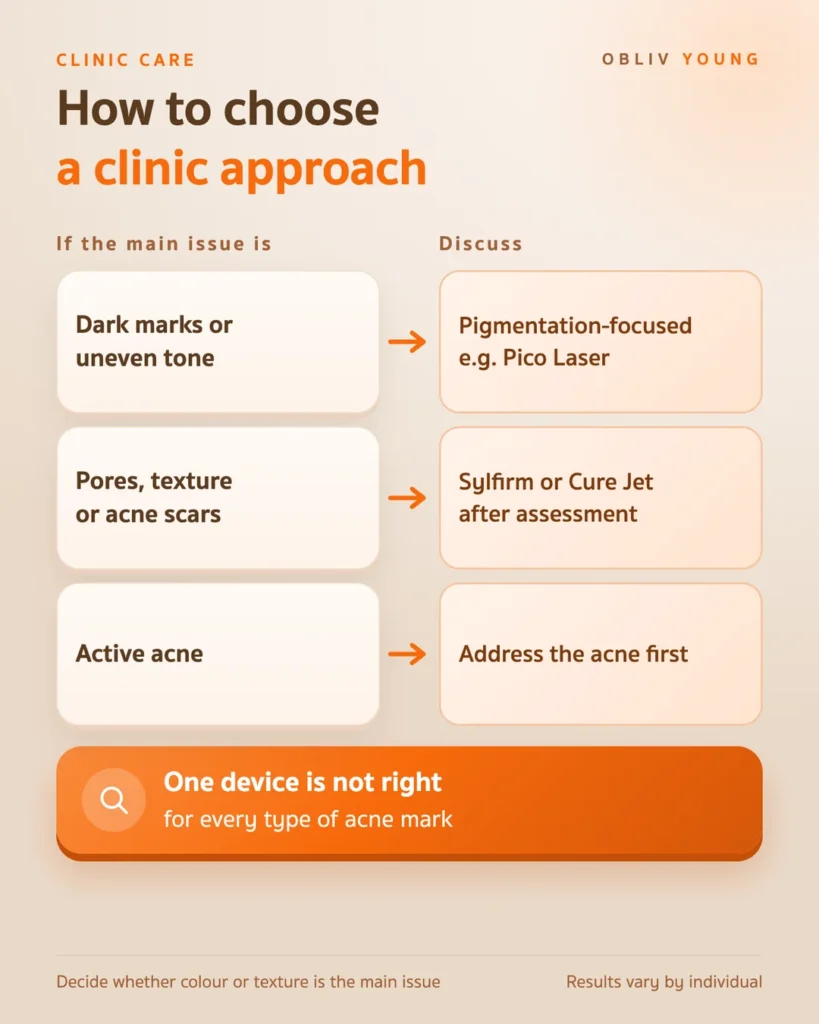
- Dark marks or uneven tone: discuss pigmentation-focused approaches such as Pico Laser.
- Pores, texture or acne scars: discuss texture-focused approaches such as Sylfirm or Cure Jet after assessment.
- Active acne: address the acne first rather than rushing into mark-focused treatments.
Frequently asked questions
Do acne marks fade on their own?
Some marks gradually fade, but timing varies with the mark type, skin tone, light exposure and repeated irritation. Acne scars need a different assessment from colour changes.
What is the difference between red and dark acne marks?
Red marks often look pink or red, while dark marks look brown or darker. They can appear together, so colour alone should not determine treatment.
Can laser reduce acne marks?
It depends on whether the main concern is red marks, dark marks or acne scars. Laser may be part of a pigmentation plan, but it is not the same answer for every type of mark.
When should I treat acne marks?
If acne is still inflamed or frequently recurring, start with the acne first. Once it is more stable, the marks that remain are easier to assess.
If you would like to assess what your main skin concern is, contact Obliv Young to ask questions and arrange an assessment.
This article is general information, not a diagnosis. A doctor should assess suitability before a procedure is chosen.
This article was medically reviewed by
Mr. Park Young Jin
Education
Graduated with a Doctor of Medicine degree from Inha University College of Medicine, and completed an executive program at Seoul National University. Gained experience as a Public Doctor within the government sector before advancing into Aesthetic Medicine with leading Korean clinic groups, including Forever Plastic Surgery, Ppeum Clinic, and Y&I Clinic, serving as a physician and Senior Doctor
Specializes in
Specializes in Aesthetic Medicine, Facial Contouring, and Facelifting Techniques, serving as President of the Obliv Clinic Network (Incheon, Bangkok, Dubai). Also active in the academic community as Academy Director of the Korean Aesthetic Surgery & Laser Society and Senior Director of the Korean Academy of Facelifting and Contouring , as well as a Global KOL and Key Doctor for leading brands including Wontech, MERZ, Jetema, Amalian, and Gouri, covering Filler, Energy-Based Devices, and Skin Rejuvenation technologies internationally. Source: Aestheticsa