Acne Around the Mouth: Possible Causes and When to Seek Assessment
Short answer: Bumps around the mouth may be acne caused by blocked and inflamed follicles, but they can also result from irritation, contact reactions, folliculitis, or a periorificial-dermatitis-like rash.
The location alone cannot identify the cause. Acne may include comedones and inflamed pimples, while a rash-like pattern may involve small, similar bumps with itch, burning, dryness, or scale. Use gentle care, avoid picking and repeated product experiments, and seek an assessment if the eruption persists, spreads, becomes very uncomfortable, or does not respond to simple care.
Key Takeaways
- A bump around the mouth is not automatically acne.
- Comedones can support an acne pattern, while small itchy, burning, scaly, similar-looking bumps may need a different assessment.
- Toothpaste, cosmetics, saliva, friction, masks, and facial creams may contribute for some people, but the location does not prove a cause.
- Spreading, severe, recurrent, eye-area, blistering, or treatment-resistant eruptions deserve professional assessment.
อ่านหัวข้อที่สนใจ
- What it can look like
- Possible causes
- Look-alike rashes
- Basic care
- When to seek assessment
- Choosing treatment for acne
- FAQ
What can acne around the mouth look like?
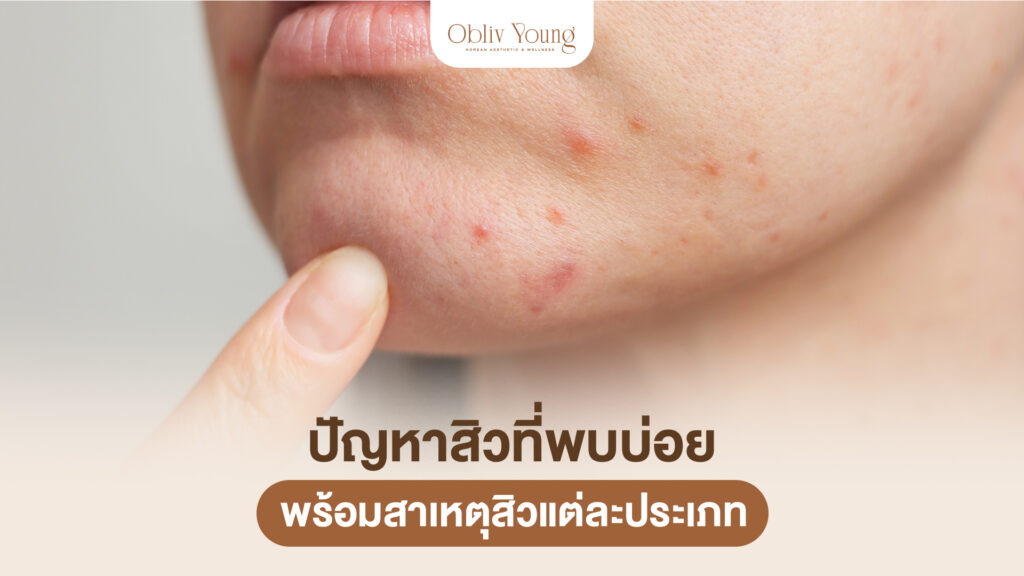
Acne around the mouth may include whiteheads, blackheads, red bumps, or pustules, sometimes with breakouts on the chin or jawline. Several lesion types can appear together, so a location-based label is not enough to establish the diagnosis.
Small, similar-looking bumps with itch, burning, dryness, or scale around the mouth, nose, or eyes may fit a periorificial-dermatitis-like pattern or another facial rash. These features are clues for a clinician, not a self-diagnosis.
Why might bumps appear around the mouth?
Acne can involve follicle blockage, oil, inflammation, hormonal changes, and friction. Local factors such as masks, repeated wiping, saliva, lip products, or a heavy product that stays on the skin may contribute for some people.
Toothpaste, lip balm, cosmetics, or a facial cream may be relevant when a flare follows a product change, but timing alone does not prove causation. If you use a prescribed facial cream, tell the clinician about it and do not change prescribed treatment without advice.
Hormonal factors may contribute to acne for some people, particularly when breakouts recur on the chin or jawline. “Acne around the mouth in women” and “acne around the mouth in men” are not diagnoses; the lesion pattern, history, and other symptoms matter more than gender.
How can it differ from a perioral or other facial rash?
Acne often includes comedones such as whiteheads or blackheads, along with inflamed lesions. Some periorificial dermatitis patterns instead involve groups of small red bumps, itch, burning, dryness, or scale, sometimes extending toward the nose or eyes. The patterns can overlap, and absence of comedones is only a clue.
Irritant or allergic contact dermatitis, folliculitis, and other conditions can also create bumps near the mouth. If the eruption began after a new product or does not respond to an acne routine, avoid adding multiple products and seek advice.
Do not use someone else’s medication or a product that claims to treat every rash around the mouth. Irritation can make the eruption more difficult to assess.
What can you do while arranging an assessment?
- Clean the area around the mouth gently and avoid repeated rubbing or scrubbing.
- Notice products that touch the area, such as lip balm, makeup, or toothpaste, and pause any that seem irritating.
- Avoid squeezing or picking bumps, which can make marks more noticeable.
- Arrange assessment if there is burning, itch, scaling, or a spreading rash, as it may not be acne.
Cleanse gently and pat dry without rubbing. Reduce repeated wiping, lip licking, and unnecessary touching. If a mask or other item contacts the area, keep it clean and replace it as appropriate. Avoid picking, squeezing, scrubs, and strong product combinations on burning or peeling skin.
If a product may be contributing, stop adding new products and keep a simple record of what touches the area. Do not abruptly stop a prescribed medicine without asking the prescriber. Bring product names or photographs of the labels to an appointment.
Basic care is meant to reduce irritation; it cannot confirm that the eruption is acne or treat every look-alike condition. Persistent or unclear cases should be assessed before choosing a treatment.
When should you see a doctor?
Arrange an assessment when the eruption persists, spreads toward the nose or eyes, burns or itches significantly, becomes scaly, recurs after the same product, or does not improve with gentle care. A rash-like pattern should not be forced into an acne diagnosis.
Seek prompt care for marked swelling, severe pain or warmth, fever, an open sore with discharge, grouped blisters, or symptoms close to the eye. Mention pregnancy, breastfeeding, medical conditions, sensitive skin, and regular medicines before treatment is selected.
For a general acne pathway, see Skin Clarity. This is an educational route, not a diagnosis based on an article.
If it is acne, how is treatment chosen?
A clinician considers the lesion type, duration, itch or burning, products and medicines used, recurrence pattern, and other symptoms. Treatment for comedonal or inflammatory acne may differ from treatment for a facial rash, so a device or spot treatment should not be chosen before the cause is considered.
If assessment supports an acne concern, the clinician may discuss skin care or an appropriate service on an individual basis. Cure Jet is a service-information route that must be checked for current scope before installation. It should not be described as a treatment for every rash around the mouth or as a guaranteed outcome.
FAQ
What causes acne around the mouth?
Possible contributors include blocked follicles, inflammation, hormonal changes, friction, saliva, masks, and products that contact the skin. Irritant dermatitis and other conditions can look similar, so persistent eruptions should be assessed.
Are spots around the mouth and chin hormonal acne?
Hormonal factors may contribute for some people, but not every chin or mouth-area eruption is hormonal acne. Itch, burning, scale, and uniform small bumps should prompt consideration of other causes.
Is acne around the mouth different in women and men?
Gender alone does not determine the cause or treatment. Acne, irritation, and periorificial-dermatitis-like patterns can occur in anyone. The lesion pattern and history are more useful than a gender-based label.
How is a rash around the mouth different from acne?
Some rashes involve small red bumps with itch, burning, dryness, or scale and may have no obvious comedones. Acne may include whiteheads, blackheads, or varied inflamed pimples. Because the patterns overlap, an article or online image cannot confirm the diagnosis.
How should acne around the mouth be treated?
Start with gentle care, avoid picking, and do not add several new products at once. If the eruption burns, itches, spreads, recurs, or does not improve, seek assessment to distinguish acne from a rash or folliculitis before selecting treatment.
If you would like to understand your main skin concern, you can contact Obliv Young to ask questions and arrange an assessment.

This article was medically reviewed by
Dr. Park Young Jin
Education
Graduated with a Doctor of Medicine degree from Inha University College of Medicine, and completed an executive program at Seoul National University. Gained experience as a Public Doctor within the government sector before advancing into Aesthetic Medicine with leading Korean clinic groups, including Forever Plastic Surgery, Ppeum Clinic, and Y&I Clinic, serving as a physician and Senior Doctor
Specializes in
Specializes in Aesthetic Medicine, Facial Contouring, and Facelifting Techniques, serving as President of the Obliv Clinic Network (Incheon, Bangkok, Dubai). Also active in the academic community as Academy Director of the Korean Aesthetic Surgery & Laser Society and Senior Director of the Korean Academy of Facelifting and Contouring , as well as a Global KOL and Key Doctor for leading brands including Wontech, MERZ, Jetema, Amalian, and Gouri, covering Filler, Energy-Based Devices, and Skin Rejuvenation technologies internationally. Source: Aestheticsa